Showing posts with label Wednesday. Show all posts

Wednesday, 4 February 2015

That deepest, darkest part of the internet.

I have no idea what to write, my brain is dead since essays, I haven't read much recently, or at least not finished any books. And there's no way you could make me say another word on Homer and his flipping epic poetry for a long, long time So I'm going to go a bit off-kilter today and talk about the dreaded area of the internet that is Fanfiction. It’s certainly a guilty pleasure of mine: I don’t deny I would be a much better student had I never discovered the magical Archive of our Own (AO3) and all the angsty goodness it provides between actual episodes of Sherlock.

(My housemate asked to borrow my laptop while I had all my research for this up. It was the most tense 30 seconds of my time here)

Fanfiction is not a new concept, it existed before the internet did, though the internet, and sites such as AO3 and Fanfiction.net certainly helped to spread its popularity. Several large books series (James Bond, Hitchhikers, and Sherlock Holmes) have been continued following the Author’s death, when I worked in a bookshop last year one of the most popular books we were selling was William Boyd’s Solo which was a new James Bond book. Surely these can be considered a form of fanfiction? How about the novel ‘Pride and Prejudice and Zombies’ or ‘The Hound of the D’Urbervilles’ which is a retelling of the Sherlock Holmes works from Moriarty’s side? Fanfiction is not just hidden in the deep dark corners of the internet, it’s out there, in bookshops and on bookshelves. You can’t hide. Though the numbers of these in no way compare to the (literally) millions of works on the internet. If I ask AO3 for Sherlock fanfiction, there are nearly 75,000 results. It’s insane.

I have no explanation for the internet’s obsession with slash fiction. It just is. I am (unashamedly) a part of this, though I only have one pairing I really fangirl over (My beautiful Sebastian Moran and James Moriarty), if you have a pairing you think ought to be, it will exist, I promise you. And it will have a name. Try ‘Spirk’ (Spock/Kirk) or ‘Johnlock’ (Figure it out…) Heck, for the purpose of this blog post I went looking for pairings and even (Horrifyingly) found graphic fanfiction about the Fourth Doctor getting John Watson pregnant (?!!!!!). I didn't say all fanfiction was good. There are words I will never look at in the same way again. *Shudders*. There is also a weird obsession with incest. Sam and Dean Winchester, Sebastian and Severin Moran, I don’t understand this. It’s so wrong, but sometimes it just works.

Some of it, however, is amazing. And we should certainly give the author’s credit for their achievements. As I mentioned, most of the fanfiction I look for is Sherlock (MorMor stuff) and there is a fic within this fandom that is revered; Pasiphile’s ‘These Violent Delights’. At 168,000 words (considering The Hunger Games is just over 101,000) this story has everything, it’s well written, creative, and quite honestly elicited more of an emotional response from me than many published stories. It’s amazing (and probably does a much better job of smutty goodness and manipulative relationships than that infamous Fifty Shades of Grey. Seriously.)

I want to say a brief word on AU fiction, because I find it quite fun. Most of my favourite fics are set in the canon universe and I never thought I’d like anything else, but I found an author on AO3 who does some amazing Moriarty/Moran AU fics. I’ve loved them as soldiers, rock stars, even ballet dancers. Its quite interesting to see the characters in different settings.

Is it wrong and damaging to the industry? Probably not. Some authors are very much against it, George R R Martin, for example and Anne Rice of Interview with a Vampire fame, claiming that it breaks copyright laws and undermines the author ect, ect… but in reality I think it’s pretty harmless. It might even evoke more of an interest in something. The stories found on AO3 rarely claim to be canonical, and will never be a part of the original. It’s just a bit of fun. An extension of the fiction written by and for the fans. Honestly, look me in the eye and tell me that JK Rowling is ever going to write her own story of the blossoming romance between Minerva McGonagall and Draco Malfoy. (It exists on AO3). And if she did, nobody would claim it was anything other than her creation.

In conclusion. Fanfiction, while often utterly filthy, sometimes awful and nearly always plain weird, is ultimately just a bit of fun. It’s not harmful to an author’s reputation, it might actually be a compliment. And if you come from a fandom that gets just three episodes every 18 months, sometimes fanfiction is all we have. It fills the gaps, expands the fandom, explores the characters, and is often just as well written as many of the best books.

To prove my point, watch this (Very amusing) video of the cast of X-Men on Graham Norton talking about fanart and Fanfiction. 


I cannot believe I just wrote so much on fanfiction. Please don’t judge me. 
Emily


Links:
Pasiphile – These Violent Delights


AU Author: Bakerstreetashtray
The Barre (Ballet AU)
Rust Red Skies (Military AU)
After The High (Rockstar AU)


Wednesday, 21 January 2015

How do I define History? It's just one F***ing thing after another.

So, my first post of the year. I had essays, I have an excuse for being absent, but I’m quite excited about today’s post.
Today I want to discuss one of my favourite films.
Yes, I know this is supposed to be a literature post, but hear me out. Because this film reminds me exactly what it is I adore about books and history, and how they intertwine. And this film is the stage-screen adaptation of Alan Bennett’s The History Boys. I’ll tell you that if I ever got around to writing up a bucket list, being in a production of The History Boys would be somewhere near the top. I don’t care about the all-male casting, this is the twenty-first century, I want to play one of the boys – they’re fascinating characters. Dakin and Posner and Akhtar and Scripps and Lockwood and Rudge and Crowther and Timms are brilliant. If my limited history in theatre has told me anything, it's that I'm not afraid to play a male character.
If anything, watch it for the cast, loads of whom you will recognise! James Corden, Dominic Cooper), the Late Richard Griffiths, Samuel Anderson, Francis De La Tour, Penelope Wilton, Russell Tovey, Steven Campbell-Moore and loads of other faces you’ll recognise.
I think The History Boys struck a chord with me when I saw it, because at the time when I discovered it I was writing my personal statement, just like the boys I was fighting for a place to study History at university, and this play told me exactly what it was I was feeling this innate love of books and history and learning that was what I wanted to describe but never had the words;
"The best moments in reading are when you come across something - a thought, a feeling, a way of looking at things - that you'd thought special, particular to you. And here it is, set down by someone else, a person you've never met, maybe even someone long dead. And it's as if a hand has come out, and taken yours." – Hector
And to apply it to history it’s all about having those ‘gobbets’ (Quotes) ready, even if you don’t understand the quotes (As our dear Scripps says in the play ‘Most of the stuff poetry’s about hasn’t happened to us yet’), When you do finally come to understand the feelings, you’ll have the gobbets ready. Mr Hector teaches us in the play that he “would hate to turn out boys who, in later life, would claim to have a love of literature, or speak of the lure of language, and their love of words.” is rather eccentric General Studies classes are to make the boys more rounded individuals, he calls it ‘Sheer, calculated silliness.’

One of the things I love about this play is the idea of knowledge for knowledge’s sake. I pride myself in ‘useless’ knowledge, quotes and poems and random information that will never come up in exams or tests or probably even a pub quiz but it’s there and I can use it where I want, drop it into conversation or make doodles from it in my notebook. I can tell you the opening lines of dozens of books, I can name the horses of great military leaders throughout the years and I can tell you the name of the man who was Trotsky’s bodyguard during a failed assassination. This film teaches me that this sort of knowledge isn't entirely without purpose. I’m full of gobbets, prepared for anything the world throws at me. Some of them even come from this film, it’s rather quotable, and with Samuel Barnett’s stunning renditions of Bye Bye Blackbird, Bewitched Bothered and Bewildered and L’Accordiniste. But also the rather jolly chant;
Wish me luck as you wave me goodbye!
Cheerio; Here I go! One my way!
Wish me luck as you wave me goodbye!
Not a tear, but a cheer, make it gay!
(I’ll admit I've been singing this all week)

But the play is more than just about books or history, it’s about a clash of modern and old education, when the young Mr Irwin is brought in to polish the boys up for Oxbridge he is taken aback by their ability to sprout facts and poetry and having learned the endings to different films, knowledge to them is a game and they always have a gobbet ready to throw at everything he says, the boys are very different students under Irwin and Hector and when they share a class the boys freeze ‘We don’t know whose class we are, sir, Yours, or Mister Hector’s’.
It’s about learning about oneself, growing up, the boys are all very different: from Sporty Rudge who, when asked to define history, comes up with the marvelous quote I used for the title this week; to the outrageous Dakin who quickly manages to understand the game Mr Irwin is playing with them, he’s the leader of the group, smart and probably dangerous. They all come from different religious backgrounds too. Though, the fact they are grammar school candidates trying for Oxbridge does suggest an upper middle class background. All of them, despite this shared education, lead very different lives, shown to us in a horribly touching scene at the end, the boys become everything from tax lawyers to launderette owners, young Lockwood was killed by friendly fire just 28. 
A rather lovely line comes from young Posner, the most naïve of the group as he talks with the closeted Irwin;
Posner: Do you ever look at your life, Sir?
Irwin; I thought everyone did.
Posner: I'm a Jew, I'm small, I'm homosexual, and I live in Sheffield. I'm fucked.

Finally, the play is about failure, to a certain extent, and betrayal. Things don’t turn out the way they’re meant to, and the boys, though they adore Mr Hector, are having to hide the fact that he’s a sexual predator. Right at the end, all the boys get into Oxbridge but then, after giving Irwin a ride on his motorbike, Mr Hector is killed, at his funeral we listen to the headmaster telling them about Hector’s love of Literature and words, which we already know he would have hated. We learn then about the fates of the boys, Lockwood is dead, Scripps takes drugs…  I believe in the book poor Posner has a breakdown (in the film he becomes a teacher) that’s not how it was meant to end. And we are left with another of Hector’s gobbets to consider, about the purpose of education;
"Pass the parcel. That's sometimes all you can do. Take it, feel it and pass it on. Not for me, not for you, but for someone, somewhere, one day. Pass it on, boys. That's the game I want you to learn. Pass it on."
Oh, like all books I could write so much more on this, I absolutely adore this film, I could go into the ideas on homosexuality and the ideas of the mistelling of history and so much more. But no, I’ll leave it here. I may revisit the play once I have read it and seen the differences from the film.
Emily.

Wednesday, 24 December 2014

On the Ning Nang Nong, where the cows go Bong!

It is Christmas eve, so I doubt anybody is going to read this, but Happy Christmas, one and all! I hope Santa is kind to you.

(Also, I found out this week that my final grade in A Level Literature was an 'A', so I feel officially awesome enough to talk about literature on Wednesdays!)
I am writing this issue whilst listening to the Comedy genius of John Finnemore in the final episode of the Radio 4 sitcom Cabin Pressure. So in honour of the occasion, I want to talk about another comedy genius, the fantastic Spike Milligan.

If you've heard the name before, it was probably in reference to his gravestone, the immortal words 'I told you I was ill' inscribed in Celtic upon the stone. A brilliant man, a bizarre and yet wonderful sense of humour and with a cynical wit that was totally unparralelled, he wrote comedy in the form f poetry, plays, doodles, and several years of TV and radio comedy including the famous 'Goon Show'. Recently some clips of his comedy show 'Q' have been played on the BBC, so if you want to look on iPlayer, they'll be there.

Born 1918, Milligan grew up in India to a military family, and moved to London some time later, he fought in WW2 and after suffering a severe blow to the head was later invalided out of the army for mental health reasons. He suffered severe bouts of depression all the rest of his life although he claimed that the two were not related. He often referenced the war in his works, especially his poetry;

There was a young soldier
who went off to the war
which is the thing
that soldiers are made for
But then that little soldier
was blown to bits, was he.
All for his king
he did this thing:
how silly can you be?

Milligan's mental health was a very pblic affair, at a time when such things were only just starting to be treated correctly he was one of the first men willing to discuss his mental health in interviews and in the media, he even tried to explan it in his poems (See: Manic Depression Writting during his stay in hospital). And he was unafraid to make a statement and be outrageous in his works, whether it be political or environmental or whatever. His sketch 'Pakistani Dalek' is only a fine example of this, or this poem;

Said prince Charles
when they placed
the crown on his head
I suppose this means
that Mummy's dead.

But, mostly, it is Milligans randomness that makes him so wonderful, the strange little ditties and wordplay that came out of a desire to connect with his children after his divorce. And so I shall leave you with such a poem; thos is one of my favourite poems, and was shown to me by my dad, who picked up a random book in a shop in Swansea thirty years ago and also found it brilliant. The book was 'The Essential Spike Milligan' and I have it next to me as I write this having stolen it from his shelf and adored it. And the poem was 'Silly Old Baboon'. It's daft, random and witty, quite refreshing after a lot of heavy poetry being studied this year, and I hope it puts you all in a good mood for Christmas!
There was a baboon
Who one afternoon
Said I think I will fly to the sun
So with great palms
strapped to his arms
he started he takeoff run
Mile after mile
He galloped in style
But never once left the ground
You’re going too slow said a passing crow
Try reaching the speed ofsound
SO
he put on a spurt
My God how it hurt
both the soles of his feet caught on fire
As he went through a stream
There were great clouds of steam
Buthe never got any higher
On and on through the night
both his knees caught alight
clouds of smoke billowed out of his rear!!!
Quick to his aid
Were the fire brigade
They chased him for over a year
Many moons passed by
Did Baboon ever fly
Did he ever get to the sun
I’ve just heard today,
he’s well on his way
He’ll be passing through Acton at one.

PS – well, what do you expect from a baboon?

Merry Christmas! I know this was short and vague again, I'll try and be a bit more up to scratch in the new year once I'm back in Cardiff and Christmas is out the way.
Emily.

Wednesday, 17 December 2014

Don't Panic!

Right.

I spent ages wondering what to write about today, and I have eventually decided to keep to the theme of radio series-cum-books, I also wanted something a bit more cheery in the run up to Christmas, so here it is: The Hitchhikers Guide to the Galaxy.
((NB, I would like to add, for your amusement, that I had to check that my English was correct in the above sentence. It is now sadly ingrained forever into my internet history that on 17/12/2014, I asked Google to define 'cum'. In retrospect, I really should have just used a different word))

Unlike The War of the Worlds, Hitchhikers began life as a radio series, and was later created into a book, or the infamous 'Triology of Four', which incidentally contains five books, with a sixth by Eoin Colfer. This messy logic is only fitting for this damn book, which will forever be one of the strangest things ever written, with it's ridiculous made up language and even more ridiculous plotline. If you want an overview of the plotline, here's Wikipedia, because I have neither the time nor patience to go into enough detail: http://en.wikipedia.org/wiki/The_Hitchhiker%27s_Guide_to_the_Galaxy_(novel)

Douglas Adams may be the most famous writer to come out of Doctor Who, having written several episodes in the 1970s, he's had several spin off books too, and his works are constantly referenced even into the reboot series, Hitchhikers is a favourite book of the God of modern Who, Russel T Davies, it is an icon of British science fiction, for sure.

One of the main reasons this book is so special is the brilliance of the wordplay and command of language. Adams skirts just on the line between logic and nonsense, so much of the stuff you read reads like it ought to make sense. You know it doesn't make sense, but you can't deny the reasoning behind it. For example...
"a towel has immense psychological value.... What the strag will think is that any man that can hitch the length and breadth of the Galaxy, rough it, slum it, struggle against terrible odds, win through and still know where his towel is, is clearly a man to be reckoned with."
Secondly, Hitchhikers is amazing because of how ingrained into culture it has become without anybody really noticing. Walk into any room of people anywhere in the world and ask them what the meaning of life is, guaranteed at least one person will shout out '42!', they may not even know why, but it's a reference to the answer the great computer 'Deep Thought' gave when the mice gave it 7.5 billion years to answer the same question.

The randomness of it all just makes sense, mostly due to the existence of the 'Infinite Probability Drive', which makes unlikely things more likely to happen:
Curiously enough, the only thing that went through the mind of the bowl of petunias as it fell was Oh no, not again. Many people have speculated that if we knew exactly why the bowl of petunias had thought that we would know a lot more about the nature of the Universe than we do now.
Once you have read the book, it will be forever ingrained in your brain that 42 is just the answer, because it is, that you should never, ever let a Vogon read you poetry, that the Norwegian Fjords were designed by Slartibartfast and he won a competition for them, that you should always carry a towel upon your person and that your best friend might be from a small planet in the vicinity of Betelgeuse and not from Guildford as he usually claims.

Having spent an hour trying, I now realise there is absolutely no way to explain this book other than to use the word 'odd.'. So I am going to finish up here, leave it short and sweet, and let you go.
Emily.

Wednesday, 10 December 2014

No-one would have believed, in the last years of the 19th century, that this world was being watched...

I entirely forgot to write a post last week. Sorry. I have no excuses, I had nothing to do all day but I still failed. No matter...

Firtsly, I would like to pick up on a point Rachael made on Friday about time periods and the end of 'Ancient History.' I had a great lecture last week about Periodization, chopping the past up into manageable chunks, it is essential for the study of history, but nearly impossible to do right, because it's not a natural way to divide History. I currently study three periods of history which by rights shouldn't overlap, but if you take ancient Rome and say (for example) it ends in the 5th Century AD, you're already well into the medieval period, and when does this end? With a sudden surge of technological advancement in the 13th Century? Somewhere along this line it blurs into Early modern period, the end of which is a source of great controversy - is it in 1517 when Martin Luther pins his theses to a church door in Germany, or the 1790s during the French Revolution - That's a 200 year disagreement that makes History a bugger to study. But it has to be done. If you can't devide History into the such called Frameworks (Periodization, history of individual nations, history of individual people...) you have to write about everything. And that would be impossible. Paradoxically, by limiting your studies using a framework, you unavoidably add severe bias to your work and cut off potentially argument changing facts. Historians are fighting a constant battle they can never win!
Couldn't resist adding it in
(Basically, people who tell you History is a soft subject have never studied it. And you should supply is cookies when you see us because we are often found lying in piles of books in confusion and exhaustion)

On the other hand, linking to the theme, to me studying history is living the dream. Because I want to be a historian? No. Because I want nothing more than to get in the TARDIS and fly away to travel in time. Studying history is about as close as the average girl can get to doing so, I want to be prepared for when we invent time travel. Of course they wouldn't send scientists back into the past, that would be stupid, they'll send the people who know what they're doing. The same way they didn't get engineers to fly airoplanes in the early days, they got the Navy, because they knew how to navigate big metal boxes.
On the subject of Time Machines....

This week I am going to talk about The War of the Worlds by H. G. Wells. It's a classic, has been transformed into almost every medium available. Possibly most famously on the Radio; more recently in a musical by Jeff Wayne (You know the one - 'The chances of anything coming from Mars, are a million to one, he said... But still, they come!!) and firstly as a news bulletin style Drama that was so realistic there were reports of mass hysteria throughout America as people believed the Martians were actually invading. Later the American public and it's suggestibility, not Welles and his convincing performance, was blamed as the cause. Definitely one of my favorite true stories about the 20th Century.

To summarise the story, the Martians invade, build a huge metal army, cause destruction, cause the renouncement of faith, separate families, drive people to insanity (My poor artilleryman...) and all the author wants to do is to find his wife and be safe. For most of the book it's your typical post-apocalyptic science fiction technology-dooms-us-all Victorian epic, one of the first of it's kind in describing conflict between men and extraterrestrials. Graphic description, a variety of characters from different settings tell the story brilliantly, since we hear of the unnamed author's experience of the invasion from his small rural village, it is destroyed, but the majority escape shaken, but unharmed, following the road away, and we also see it from his brother's POV in the middle of London where he is a student, the utter chaos caused in an industrial area, the huge loss of life and the last hope of mankind as some of them (including the mysterious 'Carrie', whose relation to the narrator we don't know) escape on a steamer under protection of the battleship 'Thunderchild'. This protection is quickly melted by the martians, and the humans despair.
"What good is religion if it collapses under calamity?"
Shockingly for a novel, the lack of characterisation is key. It's very personal, involving the reader by telling a first person narrative but main characters are not named, only adding to the fact that they are not important, they are just another person fighting to survive against the martian invasion, wallowing in dispair and mourning their loved ones. There's a particularly thrilling part where he has to kill a curate, who has gone insane, to stop the martians finding them through his shouting. He feels guilty, bu realises overall that he did what he had to, the martians had pulled apart a civilized society and humanity was reduced to a scrawling rat-like state, the artilleryman trying to dig underground and people fighting to the death over scraps of food. They are vermin compared to the elegant, powerful martians.

I loved reading this book, but there is one thing I will never quite get over. And that is that the end of this book is possibly THE BIGGEST ANTICLIMAX in literary history.
After so much chaos and horror and death and hunger the narrator is finally driven to death. He chooses to give himself up to the martians, the reader is geared up for a graphic, heroic ending but it never comes. Because, without warning, the martians just... die. Just before the final chapter the Martians are killed off by bacteria;
"These germs of disease have taken toll of humanity since the beginning... But by virtue of this natural selection of our kind we have developed resisting power; to no germs do we succumb without a struggle, and to many... [we are] altogether immune. But there are no bacteria in Mars, and directly these invaders arrived, directly they drank and fed, our microscopic allies began to work their overthrow. Already when I watched them they were irrevocably doomed, dying and rotting even as they went to and fro. It was inevitable. By the toll of a billion deaths man has bought his birthright of the earth, and it is his against all comers; it would still be his were the Martians ten times as mighty as they are. For neither do men live nor die in vain."
Clearly it is a very metaphorical ending, in this Victorian post-industrial age there was widespread terror of the dangers of science, apparent in almost every sci-fi novel of the 20th century (Frankenstein, for example). Bacteria kills the martians where man had failed (Though the ultimate victory is still attributed to man, since Britain was a prospering, ruling nation it would be awful to suggest we might lose a war...) But the suddenness of it shocks the reader as much as it does the narrator - this is all in the final chapter alone - and we are rewarded by a heartwarming reunite with his wife and brother and a threat that the Martians might return, not in the narrators future but maybe in the readers future. *Shiver*. It's not quite what we thought the novel was building up to, but there we are. One science defeating another. That's a new one for Victorian literature.

It's a very good book, I recommend it. I also recommend the radio musical by Jeff Wayne. I don't so much recommend the film starring Tom Cruise and annoying whiny child Dakota Fanning, though I liked it as a kid.
Emily.

Wednesday, 26 November 2014

The Chronicles of Narnia

I have wanted to do a piece about these wonderful books for some time, so here we are; Today I am going to discuss the beautiful series that is C.S Lewis' The Chronicles of Narnia. There are seven, some of which are more widely known than others:
- The Magician's Nephew
- The Lion, the Witch and the Wardrobe
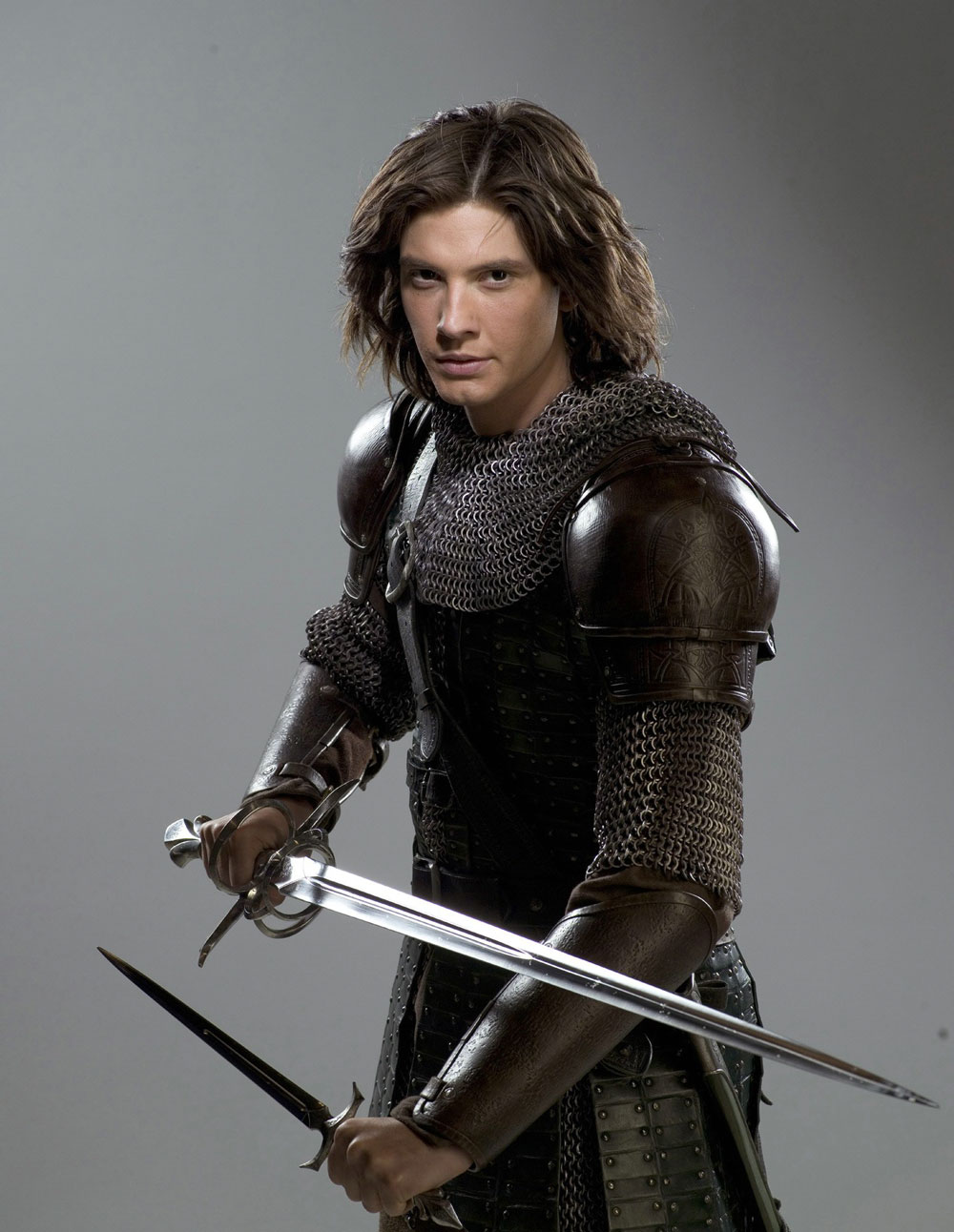
My Boy Caspian. 
- The Horse and his Boy
- Prince Caspian
- The Voyage of the Dawn Treader
- The Silver Chair
- The Last Battle
These books were very important to me as I grew up, Prince Caspian was one of my first loves and the casting of Ben Barnes when I was twelve didn't help this. Possibly paralleled with Michael Morpurgo, they are he reason I enjoy reading so much now I am (Almost) an adult. (I just arranged my first rented house this morning - official passage to Adulthood?)

Don't think I am diverging, for one of the key themes of the Narnia books is growing up. Maybe not in so literal a sense as aging, but religiously, for sure. Let us not forget that Narnia is a complex allegory of Biblical themes - The sacrifice and rebirth of Aslan to absolve Edmund from his sins; sound familiar? For three books we follow (mainly Lucy and Edmund's religious journey, they become good people (Queen Lucy the Valiant and King Edmund the Just) and when they have finished, culminating in the heroic 'death' of Reepicheep the brave mouse as he goes on to find 'Aslan's Country', Aslan appears as a lamb (!) and tells them that Lucy and Edmund cannot return to Narnia, for they must learn to find him in their own world; 
 "'I am [in your world],' said Aslan. 'But there I have another name. You must learn to know me by that name. This was the very reason you were brought to Narnia, that by knowing me here for a little you may know me better there'"
To conclude this sectoin about Religion, I must skip to the final book; The Last Battle which is, quite honestly, sinister. Really damn creepy and, please excuse me if you are religious, denotes one of the things I don't like about religion. This idea that, even if one leads a good, fulfilling life, a lack of belief or being considered 'unworthy' or 'distracted' will mean that you are pretty much doomed. At the very end of the series, The entire realm of Narnia is ceasing to exist, Father Time has blown his horn, the stars are falling and the Pevensies, Polly and Diggory, and their friends and family have all been killed in a train crash in our world, with Peter, Edmund, Lucy, Eustace, Jill, Polly and Diggory, 'free from old aches' were dragged to Narnia by their loyalty. These, and select few others we have met through the series, are 'Saved', taken to Aslan's world. The others, mad with panic, are considered 'unworthy', the animals have their talking ability taken from them and are left to deal with the end of the world. Not cool.

You may have noticed that our dear 'Queen Susan the Gentle' was not mentioned in my list of the saved. She was, by luck, not in the train crash that killed her whole family. Was she saved? No. She was left to suffer. 'No longer a friend of Narnia'. It is made quite clear to us that Susan, all grown up, does not conform with societal ideals of womanhood. In Jill's words 
 "she's interested in nothing now-a-days except nylons and lipstick and invitations."
C.S Lewis was a mysogenistic little man, indeed. 
She has clearly stopped believing in Narnia (allegorically, she has moved away from religion) Eustace Scrubb tells us she said to the others:
"What wonderful memories you have! Fancy you still thinking about all those funny games we used to play when we were children," 
 Of course, these are very strong ideals from the time, we cannot automatically assume that Lewis was considered outrageous for his ideas. In fact, Susan's fate is left ambiguous, it is possible - probable, even - that in the wake of the train accident Susan re-established her faith and eventually found her way to Narnia after dying perhaps of old age. This is a very complex point, and I found some wonderful articles going into detail about Lewis' misogyny HERE and HERE. They make interesting reading.
Another example of opinions of the time is the slightly racist attitude shown in the books, with the dark haired and very Jewish-Like militants from Telmar, the antagonists in Prince Caspian, and the Calormenes in The Horse and His Boy who bear a striking resemblance to a Muslim faith where even the recial slur 'darkie' is used against them.  The first article above explains better and in more detail than I can in the time I have left. Of course, these do not stand true throughout, Prince Caspian himself is a Telmarine, and Susan later marries a Calormene, though Edmund is reported saying 'It is a wonder you could find it in your heart to show him such favour'

 But my main argument here is that whilst these are childrens books, these are not books to be read lightly. Lewis claims that the allegorical religion, misogyny and racism were not intentional, that he simply set out to make a story, but all the same, it is there. Clear as day.

In all, this series is a very much treasured and adored series, and even against a backdrop of religious allegories and possible misogyny and racism, these stories do catch the attention of children, of magical worlds that can be found in Wardrobes or in times of strife such as war torn Britain or the return to school, of fauns and talking animals and centaurs, battles where the good triumph and brave little comedy mice. Rambunctious and arrogant and greedy little boys are punished, they learn their lessons and it even becomes almost a competition, As this conversation between Eustace and Edmund shows:
"I'd like to apologise. I'm afraid I've been pretty beastly."
"That's all right," said Edmund. "Between ourselves, you haven't been as bad as I was on my first trip to Narnia. You were only an ass, but I was a traitor."
They are fantastic stories. And wittily written, simple, and all round lovely.I certainly couldn't leave without mentioning my favorite opening line of any book ever:
'There once was a boy named Eustace Clarence Scrubb. And he almost deserved it.'
Phew, that went deeper than I was intending it to, so sorry. I hope I didn't offend anyone or ruin your childhood. They are fantastic books, just with outdated ideas. I was also a little pushed for time. Wednesdays are pure chaos for me. 
Ta ta for now. 
Emily

Wednesday, 19 November 2014

'We're all just stories in the end; Let's make it a good one.'

Right, ten minutes to midnight, will I make it? Probably not. Sorry. Uni work got ahead of me this week, and I was at the cinema watching The Imitation Game Which is fantastic, funny and heart wrenching. And true! 

Growing up in Milton Keynes, as I believe all of the bloggers here have (Though correct me if I am mistaken), it is hard to avoid the stories of the workers at Bletchely Park, the work which shortened the war by an estimated two years and founded the entire field of computer science. If you didn't go there on a school trip (one memory occurs of playing evacuees in year six) you might spot the formal apology for the way the genius Mr Turing was treated in the 1950s on the wall in the bookshop, or spot news of events there in the local paper, It's wonderful to have such fantastic history right on your doorstep and Benedict Cumberbatch brought Alan Turning to life in a wonderful manner. Of course it was talked about on a few occasions last week, so I won't go on too much about it too much, but as you may have guessed - and Rachael will certainly understand, history makes me excited.

For the challenge I picked a quote from Doctor Who; said by Matt Smith's 11th Doctor.

We're all just stories in the end. Let's make it a good one, eh?'
I love this quote. On a very basic level, it's meaning is the same as 'Yolo' or the far earlier 'Carpe Diem', the best stories are the interesting, well led lives. So, in my brief blog post for this week, I hope you are all inspired to be the best you can be, to enjoy yourselves and make the most of your lives!

My apologies for such a short, poorly thought out post this week and nothing about books, but it is gone midnight, and before I sleep I still have work to do for tomorrow. Though, honestly, I think I'm going to spend half an hour with music by Hudson Taylor, a cup of tea, some maryland cookies and a candle, because the top floor of my house smells of weed. Lush. 

'Night!
Emily

Wednesday, 5 November 2014

Words on Wednesdays - TFIOS!

Today I am writing my post with blistered hands after my first proper riding lesson in near six years. Good fun, but I am going to ache tomorrow!
This week's challenge is to be positive, to talk about things you are passionate about. Books are a big passion of mine, I'll move on to discuss The Fault in our Stars in just a moment, but first I want to say a little bit about my main passion; DOCTOR WHO.
I have no idea who any of the other people in this picture are,
they were very keen we should have a picture together...
This is quite a good week for it, the finale of Series 8 will be airing this Saturday, and on the same day I shall be joining forces with my friends here in beautiful Cardiff for Cardiff Comic-Con; we have cosplays ready as the eleventh Doctor, Clara and the TARDIS - I can't wait! Look at my fabulous 11th Dr Costume which I wore first in 2013:
50 years on, Sci-Fi's longest running show is just as fabulous as ever.

Right, onwards to TFIOS.
(NB - SPOILER ALERT)

What is important to remember about this book, and John Green's wonderful characters Hazel Grace Lancaster and Augustus Waters, is that they are in no way special. And especially not just because because they are sick, this is not a book about sickness, it is a book about love, and living the life you want to despite illness, not defined by it. Hazel and Gus are NOT special in the grand scheme of things, they are not going to be remembered because they are just an ordinary boy and girl who by pot luck got the short end of the stick and their lives end prematurely. Augustus Waters' acutely aware of his insignificance in the grand scheme of things, puts this very nicely;
"Anyone can name fourteen dead people. But we're disorganized mourners, so a lot of people end up remembering Shakespeare, and no one ends up remembering the person he wrote Sonnet Fifty-five about.” 
Or, of course, you need only to look at the title to see where I am coming from - the original quote from Julius Ceasar (Shakespeare) reads;
"The fault, dear Brutus, is not in our stars,
But in ourselves, that we are underlings."
I.e - There is no grand scheme that has screwed them over, it's just dumb luck and we would be fools to treat it any differently.
Now that we have moved very far away from the idea that Hazel and Augustus are what I would refer to as 'Special little snowflakes' we can look at the novel on a podium somewhere among the great Love stories. Hazel and Gus are special to each other, ('you gave me an infinity within the numbered days' - what a romantic line!) and that is what matters. It is a dysfunctional romance, yes. not ideal in every way, namely Hazel's very present and literal baggage in the form of her gas canister and Gus's premature death, but if you list all the great novels commonly associated with love, you might notice that serious flaws is a recurring theme...

Jane Eyre - He's still married, the ex lives in the attic.
Romeo and Juliet - Lasts five days, six people die including the double suicide of the titular lovers.
Lolita - Thirty-something stepfather becomes sexually obsessed with twelve year old girl. 
Paris and Helen of Troy - She runs off with him and her husband starts a ten year war.
The Great Gatsby - Gatsby is living in a dream world where he and (Now married) Daisy can follow the (metaphorical) American Dream. Ends in, again, double murder

You get my point. Despite their... issues... these, and TFIOS, are still counted as the worlds greatest love stories. I'm certain Gus would have something to say about the metaphorical resonance here. Flaws are overlooked and The Fault in our Stars succeeds in John Green's aim to 'argue for [sick people's] humanity by giving them a love story to rival the greats. And with a stunningly beautiful love quote modeled by Bryony on Monday:
'I fell in love the way you fall asleep - slowly, and then all at once...'

A sub theme of the story is the idea that we have a (albeit limited) choice on the impact we have within our own little part of the world. Gus and Hazel take very different approaaches to this, with Hazel trying to 'minimise the casualties' that will be caused by her inevitable death and Augustus desperate to 'leave [his] mark on the world', ensuring that he has a pre-funeral to ensure he has done this (by affecting his friends). His posthumous letter to Hazel suggests he is pleased with the way he has shaped his life, his own little part of the world. 

“You don't get to choose if you get hurt in this world...but you do have some say in who hurts you. I like my choices.”

I hope you liked my short and sweet piece on this marvelous book, remember you don't have to agree with my opinion, this is one nineteen year old's view on the novel, not the definite answer!

Ooh, also, Today is the Fifth November, so I shall leave you with the following parting words, and I hope you all go out and enjoy the annual celebration of the defeat of insolent and violent Catholicism! ((Please don't take this as my religious view, but that is literally what Bonfire night is; the Protestants showing off that they are better than the Catholics))

- Emily

Remember, Remember the Fifth of November
Gunpowder, Treason and Plot.
I see no reason why gunpowder, treason
Should ever be forgot.

Wednesday, 22 October 2014

Walking in the footsteps of a Stranger

This weeks quote is a commonly replicated theme throughout literature. And since We had a bit of History last week I think some book talk is due.
Of course the most famous versions of this quote is Atticus Finch in Haper Lee's much loved and socially important novel To Kill a Mockingbird. When he tells his young daughter Scout not to judge the cruel, racist and bad tempered Bob Ewell: 
"You never really understand a person until you consider things from his point of view... until you climb into his skin and walk around in it.' - Atticus Finch, TKAM
This is the advice by which Atticus tries to live his whole life, in pursuit of the truth and justice, it is a difficult concept for a young child to grasp despite her best efforts. The story ends, and the reader finally comprehends what Scout has learned over the course of the novel, once she takes a look at the world from the position of the mysterious Boo Radley. She imagines many of the key events in the book (her father shooting the rabid dog, the children finding Boo's presents) and she is at last able to understand the protection this stranger has offered her through the horrible time she has suffered in the book.

On a reader's level, Atticus' advice is of some comfort to us in the face of the prejudice and hardships faced by the characters of the novel. For example, we come to sympathise with Mayella Ewell, who lied about being raped by Tom Robinson to protect her young siblings/children and avoid the wrath of her father. (The relationship is somewhat blurry).

Moving away from the novel, being able to see thing's from another's viewpoint, to understand why another person might act as he does, is a very important feature of literature itself. Anyone who enjoys reading has at some point had an emotional outburst (whether sadness, anger, happiness) at a character we have never met and don't really know. Because for the time we are engrossed into that book, we are walking in their footsteps, seeing their world as they see it. We even come to love very dislikable characters, because by walking in their footsteps we might understand their actions.

It doesn't fit with the rest of my post, but since it is the challenge, I must talk about my favourite film:
Without a doubt, hands down, my favourite film is The Lord of The Rings. Ever since I was very young I have adored the idea of mythical races and in particular the elves, when I was seven I took up horse riding because I desperately wanted to be just like Legolas and even today I ride because of the thrill I feel when I can imagine I am a part of that world. Every day I wear my Leaf of Lorien as a reminder. Beautiful films, very fantastically made, they deserve every credit.

I'm afraid it's a rather short post this week due to time restraints, but I hope you understood the message.
Emily


Wednesday, 15 October 2014

Howdy, Words on Wednesdays.

Okay, I'll start by introducing myself. My name is Emily, I am a first year History student at Cardiff University, I enjoy reading, swimming, Doctor Who and the Eurovision Song Contest, and I have been asked to join this little team on a Wednesday. On my days I shall mostly be discussing my twin passions: literature and history.

This weeks theme is a tricky one; Why fit in when you were born to stand out - Dr Seuss. The obvious topic here would be to talk about Mr Theodore Geisel himself, undoubtedly talented writer, poet and cartoonist, adored by children worldwide. Yet, in light of the theme, I am going to step away from the obvious, and instead I will talk about a young Greek who was definitely born to stand out; Alexander the Great.

There is no denying that Alexander III of Macedonia was a young fellow determined to stand out from the crowd. His unrivaled military prowess took him from the city of Pella in Greece, to conquer an empire spanning across modern Greece, parts of Northern Africa and India, pakistan and many more places by the time he was thirty.
His desire to stand out started early. When our young prince was just ten, a horse was brought to the palace claimed to be unridable. A massive black beast with the best war breeding, but he refused to be mounted. King Phillip ordered the horse taken away, but young Alex stood forward from the crowd to examine the horse, offering to pay for it himself should he fail to tame it. He surprised all, slowly approaching the horse, letting his cloak drop to the floor and turning the beast into the sun. Miraculously, the horse let Alex ride him. 

Alexander had stood out by realising what none other had: the horse was blind in one eye, his own shadow was spooking him. According to the Historian Plutarch, King Phillip cried out 'My boy - you must find a kingdom big enough for your ambitions, Macedon is too small for you.' And Alexander was inspired to stand out.
The horse, Bucephalus (Ox-Head) lived amost to the end of Alexander's life, the Bassileus (King) died in 323BC, only three years after his beloved horse (Bucephalus died 326BC). Even then, Alexander was not ready to be forgotten, having named dozens of cities 'Alexandria' or 'Alexandropolis' for himself and even 'Bucephala' for his horse. Alexander had famously never lost a battle, and his legacy lived on to inspire other great European military leaders - General Pompey and Napoleon Bonaparte - both whom later invaded Egypt to emulate Alexander - Because in a long line of military leaders, Alexander the great stood out to them.

Like many figures in history, Alexander wanted to stand out, and his popularity and deeds show this to us, but unlike the other he didn't drift away into obscurity only be dug up by archaeologists years later. He was actually never forgotten. To quote author John Green:
 'Although Alexander was mostly just conquering territory for the glory and heroism... in his wake emerged a more closely connected world that could trade and communicate with more people more efficiently than ever before.' (1)
Alexander stood out because he made a difference, because he didn't just accept the boundaries passed to him by the generation before, because he used his own attributes (intelligence, strength) to become so memorable. And, broadly speaking, I think that is the point Dr Seuss was trying to make: Don't let yourself be restricted by what others simply accept or tell you is right.

I hope I haven't bored you with my first post, I have certainly enjoyed writing it. Let Alexander inspire you to go off and be an individual.
Emily


((1) https://www.youtube.com/watch?v=0LsrkWDCvxg )

Wednesday, 8 October 2014

Sorry Guys

Alright guys, it's Ryon here

This isn't a permanent thing... I am just filling in until we can find a more permanent girl to fill the spot. Unfortunately Carly has problems within her family and feel that she cannot find the time to do a post every Wednesday. I think I have found someone to fill the spot. But you know how it is... so I guess we will have to use another song on here... I don't know how I can relate to the quote any more than the song I used for Monday.

This weeks quote is 'To not have some battle scars is to never have lived' this quote means so much to me and I have plans for future weeks of other quotes that mean a lot to me. But don't worry we don't want to be too serious too soon... we want silly quotes too.

This post isn't going to be about what this quote means to me... that was Mondays post... this is more about telling people what's going on. ok so here is Battle Scars By Paradise Fears (sorry couldn't think of anything else)

Battle Scars - Paradise Fears

If any of the others would like to add onto this feel free :)

Love Ryon xx

remember my Go Sober challenge this month https://www.gosober.org.uk/profile/bryonysmith

Wednesday, 1 October 2014

Wind Down Wednesday

Hello good people that actually read our blog, it is Ryon here. 

It would normally be Carly doing this day. But something happened so I stepped in as I was the one she told. Hopefully she will be back next week and introduce her day properly and what it is all about.

I believe this is the day is mid week wind down to just to make the stresses of the first half of the week more bearable. But that would only be a small guess as to what the wonderful Carly has in store for you lovely people.  

OK so I'm more to starting the week with a bit of music and basing a post around that, so at the end of this post I will find a song that relaxes me. 

So sorry guys that I don't have much more to say but I haven't got the slightest clue what Carly has in mind. I guess it will be a surprise for all of us.

My relaxing song: Who You Are - Paradise Fears

OK so tomorrow is a new day and a new girl... so here's to Thursday (And a day off college for me and another on here)

See you Monday, 
Lots of Love... Ryon xxx

(Oh Sober October has started so if you guys would like to donate here is the link... it is for MacMillan cancer support... let's beat Cancer together :P Sober October Profile)